A map and a trail of notes
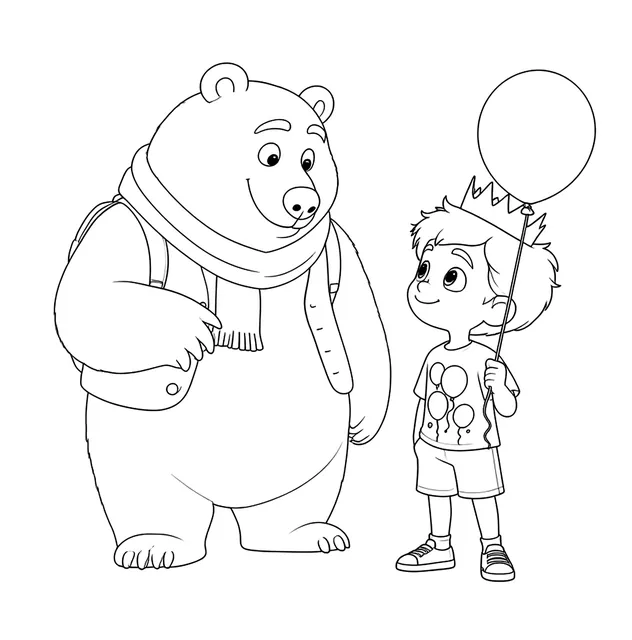
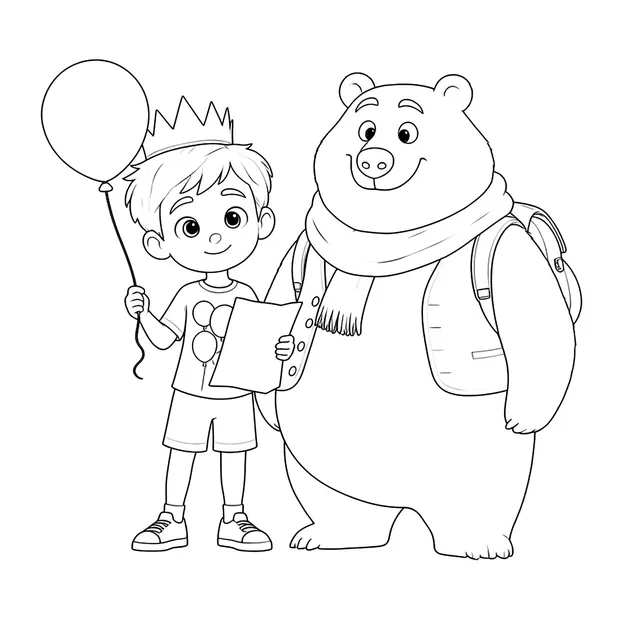
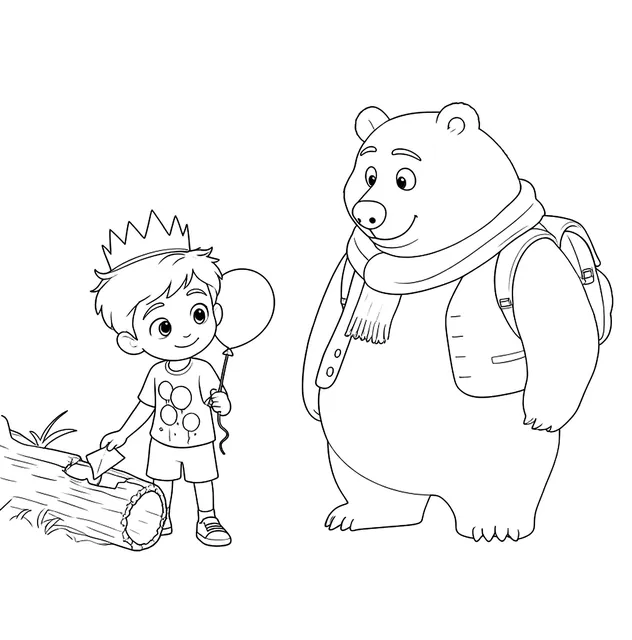
Two of the colouring pages show a boy and his bear following a map and finding a note, which makes a ready-made indoor adventure. Draw a simple map of the house, mark an X, and hide a trail of small notes that each lead to the next: under a cushion, behind the bread bin, inside a welly. Younger children can follow picture clues; older ones can solve a little riddle at each stop. At the X, leave a jar of acorns, buttons or raisins to count, then do the counting sheet together. A grandparent can write the final note, just as in the colouring page.
- Picture clues or riddles by age
- A jar of something to count at the X
A teddy who goes home with someone
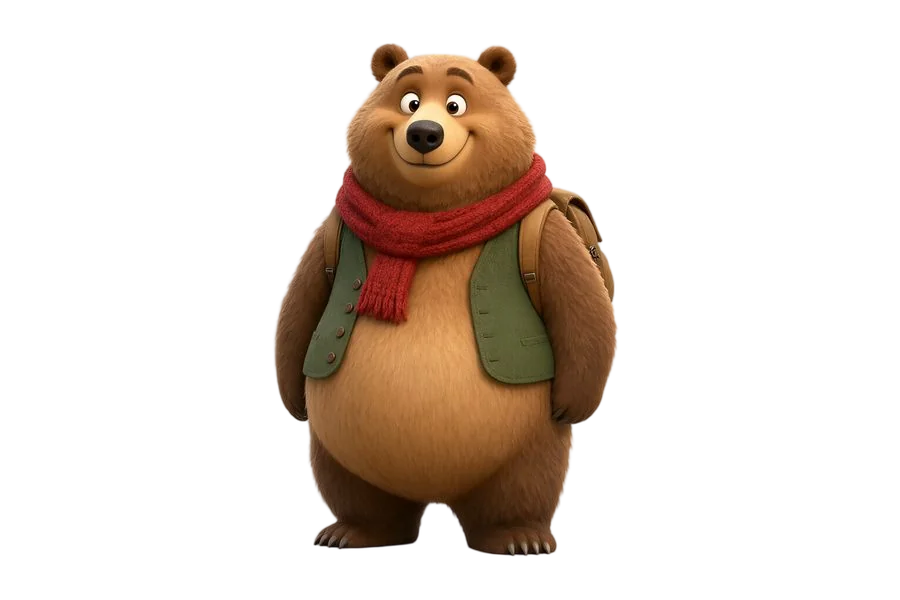
Many classrooms keep a travelling teddy who spends each weekend with a different pupil. Send Bruno home in a bag with a small notebook, and ask each family to add a drawing or a few lines about what the bear did: a trip to the shops, a football match, a visit to grandparents. On Monday the child reads the page aloud. Bear sheets at three levels make good Friday work before the bear sets off, and memory cards pairing canoes with woolly hats are a quick group game. Enter the whole register once and each pupil’s sheets arrive with their name, ready for their turn.
- A notebook that travels with the bear
- Read the weekend page aloud on Monday
A picnic for every teddy
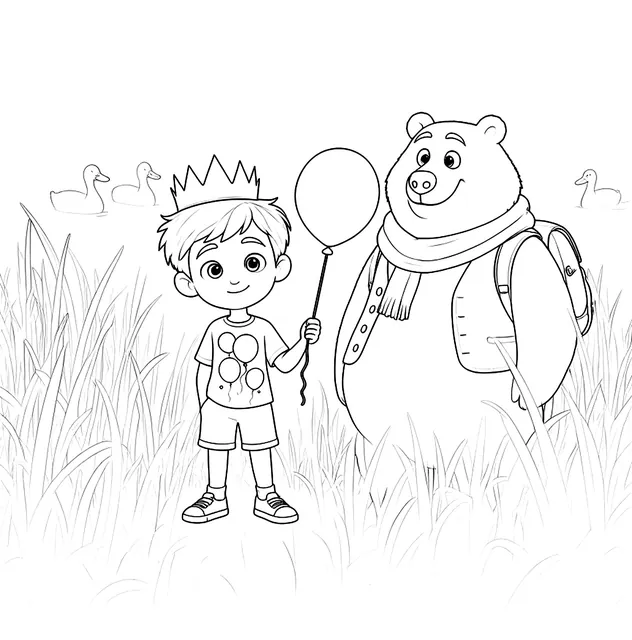
Ask guests to arrive with their favourite teddy, however worn, and spread blankets on the grass or the living-room floor. Teddies get the best seats. Small sandwiches cut into circles with a cup, a pot of honey for anyone who likes it and a plate of fruit make a fine spread. Play musical bears, where everyone hugs their teddy and freezes when the music stops. If it is a birthday, the colouring page of a boy blowing out candles fits nicely. Give every teddy a paper crown, like the one in the colouring page, and send each guest home with a polar bear dot-to-dot.
- Teddies get the best seats
- Paper crowns for every bear
Eight bears, one planet
There are eight kinds of bear, and they live in very different places. Polar bears hunt on Arctic sea ice, giant pandas eat bamboo in the mountains of China, spectacled bears live in the Andes of South America, and the small sun bear climbs trees in the forests of Southeast Asia. Brown bears, American and Asian black bears and the shaggy sloth bear of South Asia complete the set. Here is a puzzle to spring later: the koala is not a bear at all but a marsupial that carries its baby in a pouch. Mark each bear on a world map and colour it in.
- Mark each bear on a world map
- The koala is not a bear
A long winter nap
Some bears spend the cold months asleep in a den, living off the fat they stored up in autumn. Their heartbeat slows right down and they barely stir for weeks. Build a den from chairs and a blanket, collect autumn food for a pretend bear, nuts, berries and fish cut from paper, then curl up inside and see how still and quiet everyone can be. Talk about which animals sleep through winter and which stay awake. The polar bear dot-to-dot works well here, because mother polar bears dig snow dens to have their cubs. Finish with the colouring page of the boy and bear walking together.
- Pack the den with paper autumn food
- Mother polar bears dig snow dens
Camping in a fort
One colouring page shows children playing in a fort, and that is a fine plan for any afternoon. Build a fort from cushions and sheets, or pitch a proper tent in the garden, and pack it like a camping trip: torch, woolly hat, a flask of something warm and Bruno. Make a pretend campfire from paper flames and logs of rolled newspaper, then tell stories around it. A canoe made from a cardboard box can paddle across the carpet to a forest of houseplants. The level 3 maze, winding inside a bear’s round outline, is a good challenge for older campers before lights out.
- Paper flames and newspaper logs
- A cardboard-box canoe