A dragon’s den under the table
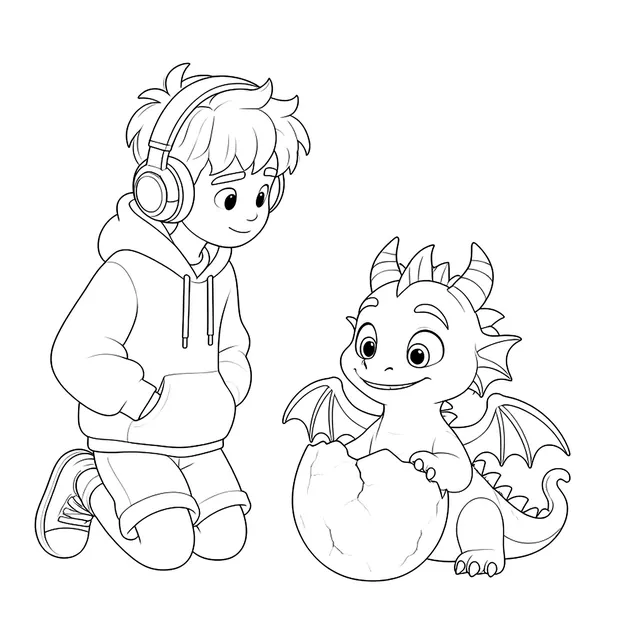
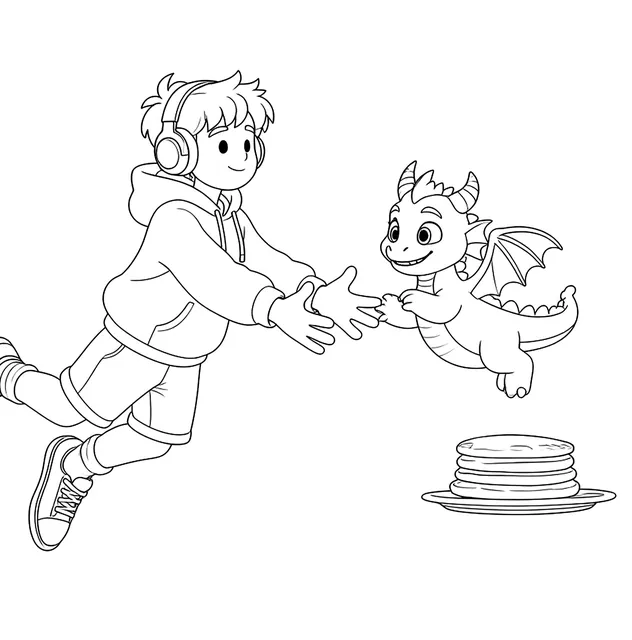
On a grey day, drape blankets over the table and you have a cave. Every dragon needs a hoard, so send the young dragon round the house to collect treasure: buttons, bottle tops, a spoon that shines. Back in the den, sort it by colour and count it, then try a counting sheet with gold coins to keep the numbers going. The colouring page of the boy watching a dragon hatch suits a torch-lit den nicely. A grown-up can play the knight who must ask politely to borrow one coin, which turns into a good game of sharing and taking turns.
- Blankets, a torch and a hoard to count
- A knight who has to ask nicely
An egg on the teacher’s desk
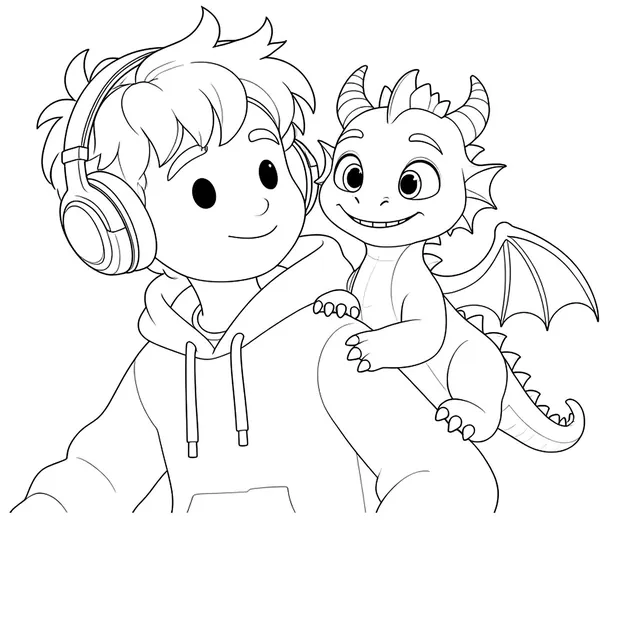
Place a paper egg on the desk one morning with a note saying it will hatch on Friday. Each day the class adds a clue: a crack, a scale, a scorch mark. Pupils guess what the dragon will look like, write a sentence about it, then draw their guess. On hatching day, hand out the colouring page of the boy playing with a dragon and let everyone name the baby by vote. Mazes at three levels mean a mixed class can all join in, and the memory cards make a calm group game for wet playtimes. Type the class list once and every child’s sheets carry their name.
- A new clue on the egg each day
- Name the hatchling by class vote
Dragons and knights at the party
Split guests into dragons and knights, and swap halfway so everyone tries both. Knights rescue gold coins from a dragon’s hoard without waking her; dragons guard with eyes closed and roar when they hear a footstep. Cardboard shields and paper wings take ten minutes each with tape and crayons. When energy drops, bring out the dot-to-dots: a sleeping dragon appears from the dots, which feels right as a quieter moment. A memory game of treasure chests and wizards’ hats keeps small groups busy around the table. Grandparents make excellent sleeping dragons, and they rarely mind the roaring.
- Swap roles halfway through
- A sleeping dragon when energy drops
Dragons in stories everywhere
Nearly every part of the world has a dragon story, and they are wonderfully different. Many European tales have winged, fire-breathing dragons sitting on gold. In Chinese stories, long dragons without wings bring rain and good fortune. The Aztecs told of Quetzalcoatl, a feathered serpent, and Norse legends have a dragon gnawing at the roots of a great tree. Read one story from a different place each evening and ask which dragon your child would most like to meet. Then use the back of a sheet to design a dragon that mixes features from them all: feathers, wings, a rain cloud, a pile of treasure.
- A dragon tale from a new place each night
- Design a dragon that borrows from them all
Real animals called dragons
Dragons are not real, but several animals carry the name. The Komodo dragon is the largest lizard alive, longer than a grown-up is tall. The bearded dragon puffs out the spiky skin under its chin when it feels threatened. The leafy seadragon is a small fish with frilly fins that look like seaweed, and a lizard called the flying dragon glides between trees on flaps of skin. Look up pictures together and compare them with Ember. Which features do they share? Scales, claws, a long tail? Make a chart on paper with two columns, real and story, and sort each feature into one.
- Komodo, bearded and leafy dragons
- Sort features into real and story
Scales, eggs and symmetry
Dragon scales are a neat way into patterns. Cut an egg shape from card and cover it with overlapping scales drawn as rows of small U shapes, alternating two colours. Fold a sheet in half, paint one wing with blobs of paint, press the halves together and open it to reveal a matching pair, a quick lesson in symmetry. The tracing sheets, with a flying dragon beside the child’s name, help steady pencil control before the fiddlier pattern work. Older children can try the level 3 maze afterwards, which twists inside a dragon’s outline. Hang the finished eggs and wings from a string as a mobile.
- Rows of U shapes make scales
- Fold-and-press wings show symmetry