A fossil dig on the kitchen table
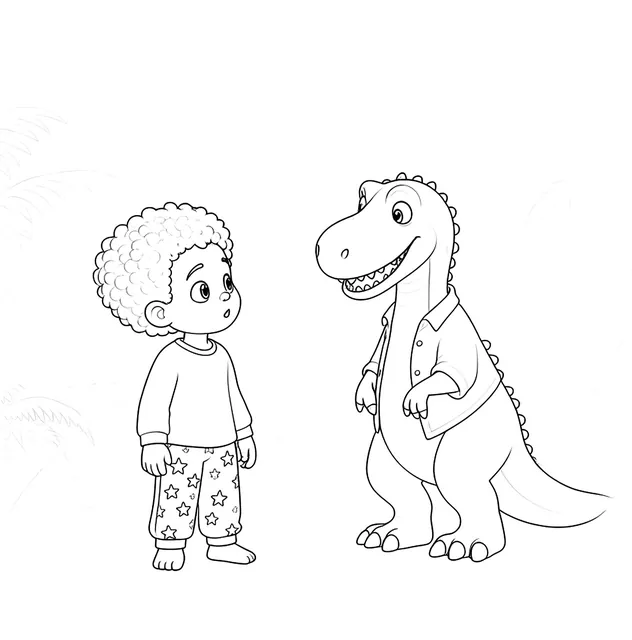
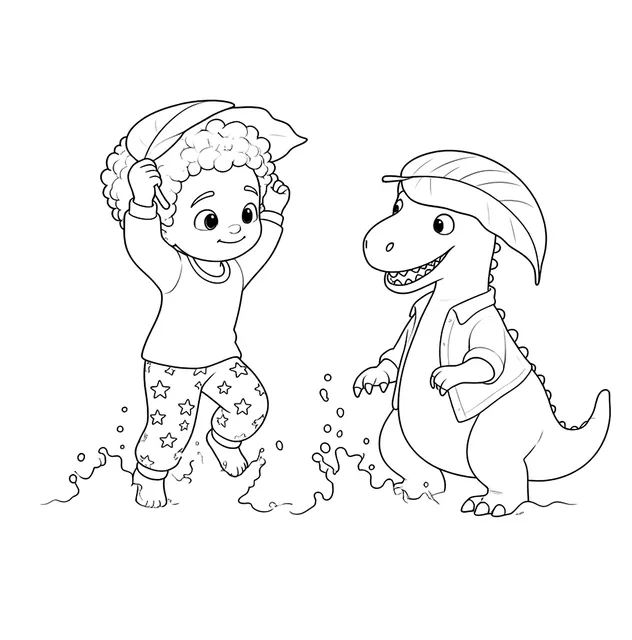
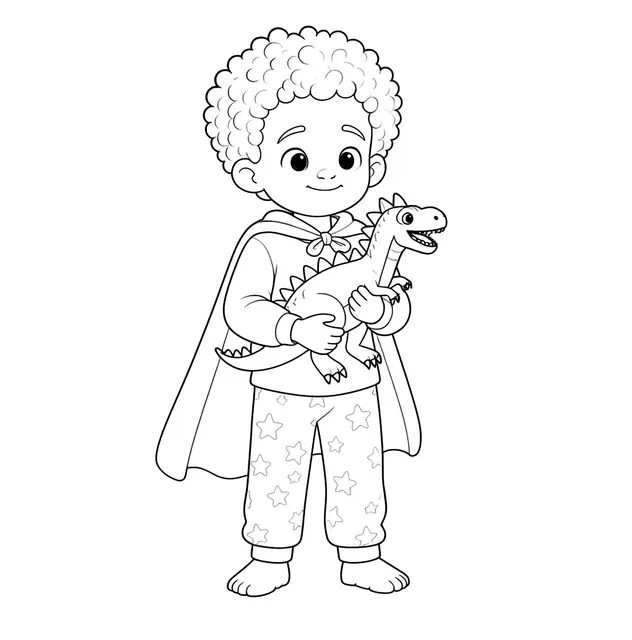
When rain keeps everyone in, bury a few small toys in a tray of dry rice or oats and hand over a pastry brush and an old spoon. Explain that real fossil hunters brush slowly so nothing breaks, then let them uncover each find and draw it on the back of a sheet. Between digs, colour the boy jumping on the sofa, which feels fair on a day stuck indoors. Finish with a counting sheet: how many eggs, how many footprints, how many ferns. A grown-up can label the finds like a museum, with a name, a date and the explorer who found them, and stand the drawings along the windowsill as a small exhibition.
- A tray of rice, a brush and a spoon
- Label each find like a museum would
A timeline across the classroom wall
Dinosaurs did not all live at once, and a long strip of paper makes that easy to see. Mark the Triassic, Jurassic and Cretaceous along it, then let each pupil colour a sheet and pin it in the right place: stegosaurus in the Jurassic, T-rex and triceratops near the end of the Cretaceous. Most children are amazed that the T-rex lived closer in time to us than to the stegosaurus. Mixed-age groups work well with the three maze levels side by side, so older pupils can help younger ones. Teachers can print a whole class list at once, and each pupil finds their own name across the top of their sheets.
- Three periods, one long strip
- Older pupils pair with younger ones
A stomping dinosaur birthday
Turn the front door into a cave entrance with a sheet of brown paper and let guests arrive as palaeontologists. Hand each one a memory card set to cut out and play in pairs while everyone gathers. A dinosaur stomp works as a game: play music, and when it stops, call out a dinosaur that everyone must copy, long necks stretching, tiny T-rex arms flapping. Hide paper eggs around the garden or living room for an egg hunt and count them together at the end. For a quieter goodbye, slip a brachiosaurus dot-to-dot and a crayon into each party bag, the guest’s name already printed at the top.
- Copy-the-dinosaur stomp game
- An egg hunt, counted at the end
Footprint detectives
Scientists work out how big a dinosaur was from its footprints, and children can try the same trick. Draw round everyone’s feet on paper, from the smallest cousin to Grandad, and measure how far apart their steps are when they walk and when they run. Longer strides mean faster movement, and palaeontologists use exactly that idea on fossil trackways. Then chalk a giant three-toed print on the pavement or tape one to the floor; a big meat-eater’s footprint could be longer than a child’s arm. The counting sheets fit in nicely afterwards, with footprints to count and compare. Keep the paper feet for a hallway trail.
- Measure walking and running strides
- Compare your foot with a giant’s print
Big names, small meanings
Dinosaur names look long, but most are built from a few small pieces. Triceratops means three-horned face, stegosaurus means roof lizard, and brachiosaurus means arm lizard, because its front legs were longer than its back ones. Saurus turns up again and again, so children soon spot it everywhere. Make a set of word cards with one piece on each and let them invent their own creature, such as a spiky-tailed swimmer, then draw it. Older readers can use the tracing sheets to copy the real names, while younger ones trace the letters of their own. A fact to save for later: pterodactyls flew beside dinosaurs but were not dinosaurs at all.
- Tri means three, saurus means lizard
- Invent and name a new dinosaur
A calm end to a busy day
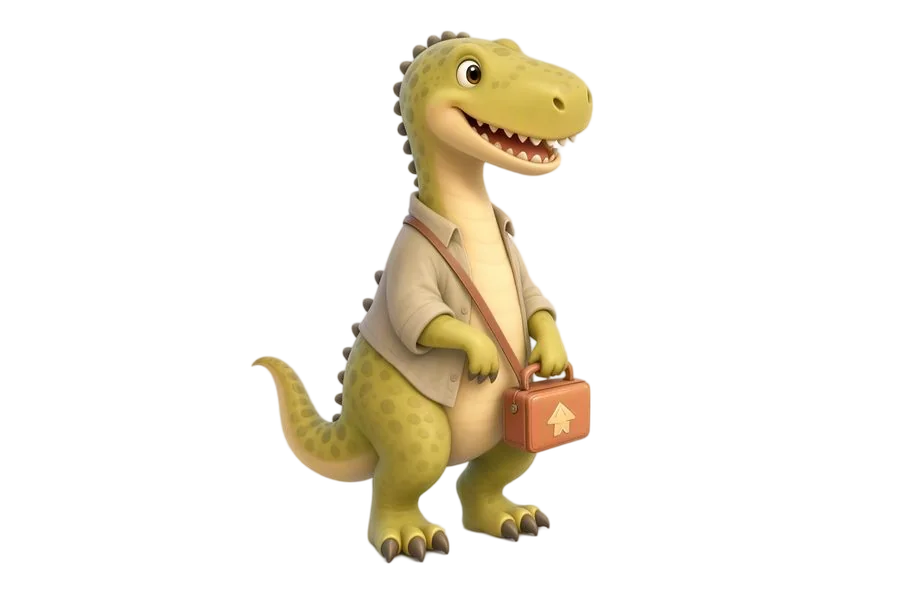
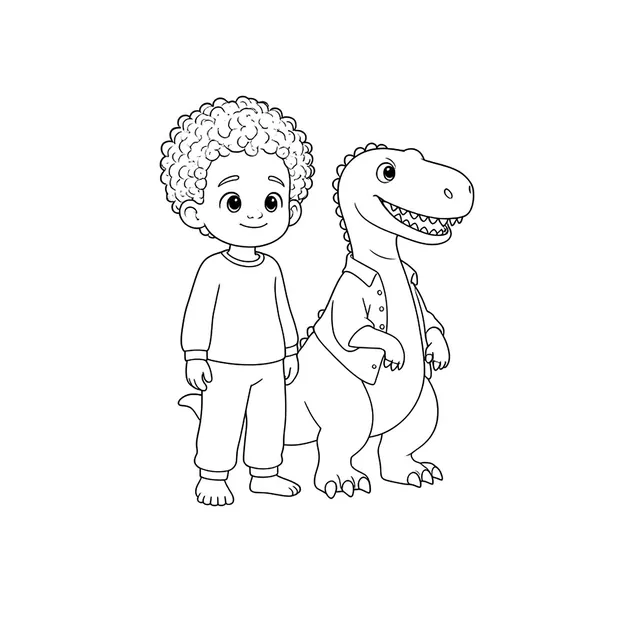
After a day of stomping, the colouring page of the boy in bed with his dinosaur makes a gentle last activity. Colour it slowly with soft pencils while talking about where Rex might sleep: in a nest of ferns, beside a warm volcano, or under the duvet. A short dot-to-dot at the easy level is calm enough for tired hands. Grandparents reading at bedtime can ask the child to invent the next part of Rex’s day, which often becomes a story worth writing down. Pin the finished picture by the bed, and let the toy dinosaur keep watch through the night.
- Soft pencils and the bedtime page
- Invent tomorrow’s adventure for Rex