A reef under the kitchen table
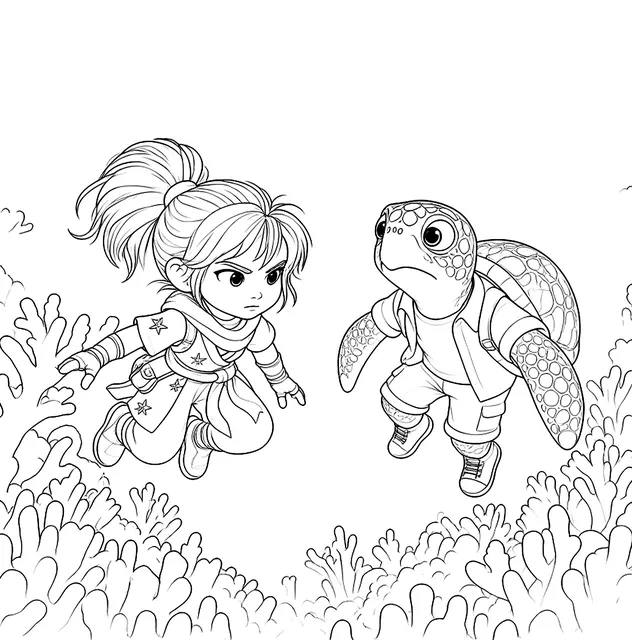
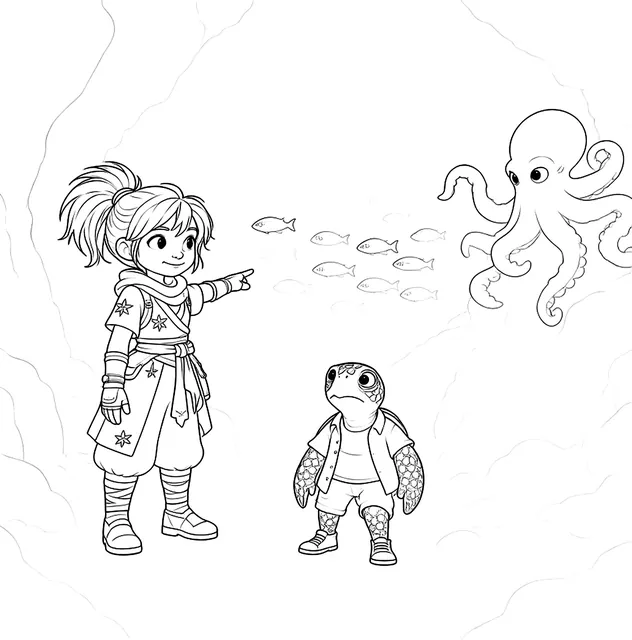
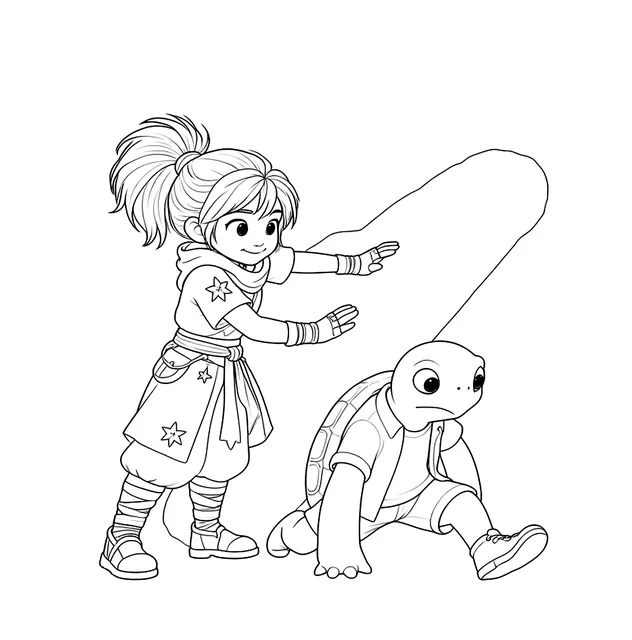
Turn the space under a table into the bottom of the sea. Hang blue and green paper or a sheet over the sides, and stick the finished colouring pages to the inside like windows into the water: the girl swimming with her turtle, the octopus waving its arms, the pair high-fiving. Crawl in with a torch and a pile of the ocean mazes, where a little fish has to find its way to the coral reef inside a whale’s outline. Make up names for every creature you colour, and keep a list on the wall of the reef. At the end of the afternoon, give each creature in the reef a job: the octopus guards the door, the turtle carries messages, the fish keep watch. The reef can stay up for a week of games.
- Colouring pages as reef windows
- A torch for the deep water
How sea turtles live
Sea turtles swim thousands of kilometres across oceans and come back to the beaches where they hatched to lay their own eggs. Baby turtles dig out of the sand at night and head for the brightest horizon, which should be the sea. Talk about this while colouring the girl lifting a stone to help her turtle. Ask what might get in a turtle’s way on the beach: rubbish, lights, holes in the sand. It leads naturally to why people pick up litter at the seaside and switch off lights near nesting beaches. Grown-ups can share one small thing they do for the sea, such as carrying a reusable bottle or picking up three pieces of litter on every beach walk, and children often want to copy it at once.
- Turtles return to the beach they hatched on
- Litter and lights make the trip harder
A beach-bag activity pack
Print a few sheets of each kind before a holiday by the sea and keep them in a folder with a pencil case. On the drive or the train, the shadow-matching sheets ask which outline belongs to the seahorse and which to the octopus, and the counting sheets fill with seashells. At the beach, use them in the shade after a swim. Then count real shells and compare: who found the most, the smallest, the stripiest? Keep a sheet from the trip and write the place and date on the back as a holiday souvenir. On a rainy beach day, the folder comes into its own. A tent or a café table becomes a puzzle corner, and the counting sheets with seashells feel almost as good as the real thing.
- A folder and a pencil case
- Count real shells to compare
An ocean topic for a class
Ocean is a favourite school topic, and the pack covers a range of ages at once. Print level 1 for the youngest, with large seashells to count and a whale with few dots, and level 3 for older children who want a harder maze. The memory cards, which pair crabs with jellyfish, work well in small groups. Add a world map to the wall and pin each finished sheet beside a different ocean, so the class learns there are five: the Pacific, the Atlantic, the Indian, the Southern and the Arctic. Older children can pick one creature from the sheets and find out three facts about it to share. The turtle, the whale and the octopus each have surprising facts, from very long journeys to eight arms.
- Three levels for one class
- Pin sheets beside the five oceans
Creatures from shallow to deep
Different animals live at different depths. Crabs scuttle at the water’s edge, turtles and seahorses swim among coral and seagrass, octopuses hide in rocky caves, and whales dive deeper than any person can. Draw a tall strip of paper shaded from pale blue at the top to nearly black at the bottom, and stick the cut-out creatures from your coloured sheets at the depth where they belong. Older children can look up one creature that lives in the deepest, darkest part and draw it at the very bottom. End by switching off the lights and shining a torch at the strip from the top. The light fades as it goes down, just as sunlight does in the real sea, and the deepest creatures stay in the dark.
- Pale at the top, dark at the bottom
- Add one creature from the deep
An under-the-sea party
For a seaside birthday or a summer party, print a colouring page for each guest with their name on it and set them out on a blue tablecloth as place cards. Fill a paddling pool or a big tray with paper fish for a fishing game, and keep a quiet table with mazes and dot-to-dots, where a whale appears from the dots. Party bags can hold a set of ocean memory cards in a small envelope. It works for any age; grown-ups at the table often find the detailed coral and bubbles hard to resist. For a group of older children, run a treasure hunt with clues hidden under shells or behind paper seaweed. Each clue can be a maze to finish before the next is found, ending at a box of shells.
- Named pages on a blue tablecloth
- Memory cards for the party bags