Before and after a farm visit
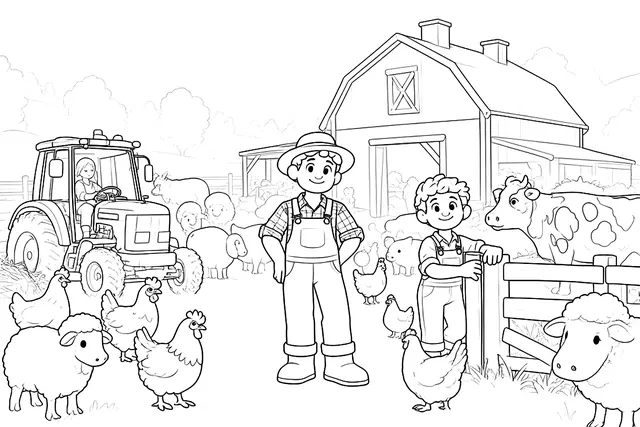
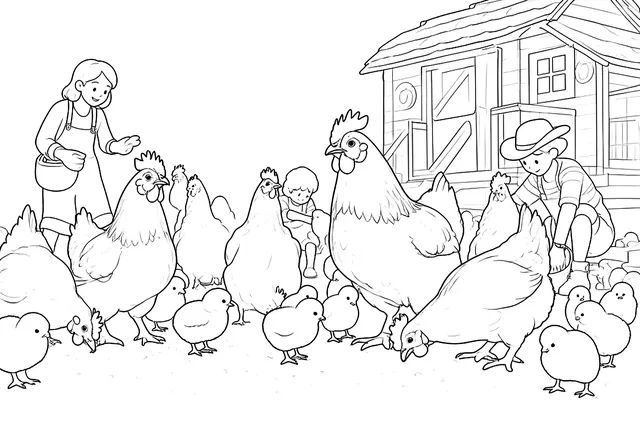
Colour a few pages the day before a trip to a farm, a petting zoo or a city farm, and take them along. The busy farmyard sheet works as a checklist: tick off each animal as you meet it, and add any the page is missing. Afterwards, colour the sheep and the sheepdog, or the ducks on the pond, in the real colours you saw, which are rarely what the crayon box expects. Sheep are often cream or brown rather than white. Write the farm’s name and the date on the back. If a visit isn’t possible, look at photographs of farm animals from a book or a library together, then colour the pages and decide which animal you would most like to meet one day.
- Tick off animals as you meet them
- Colour them as they really looked
Farm noises and farm words
Small children love the noise of a farm before they know the names. As you colour each page, make the animal’s sound and then say its name, its baby’s name and its home: a cow and a calf in a field, a hen and a chick in a hen house, a sheep and a lamb in a fold, a duck and a duckling on a pond. Older children can try the same words in another language they hear at school or at a grandparent’s house. Farm animals sound different in every language, which children find very funny. Finish with a game where one person makes a noise and everyone else races to point at the right animal on their sheets. Younger children love being the one who chooses the noise.
- Animal, baby and home for each
- Try the noises in another language
Where food comes from
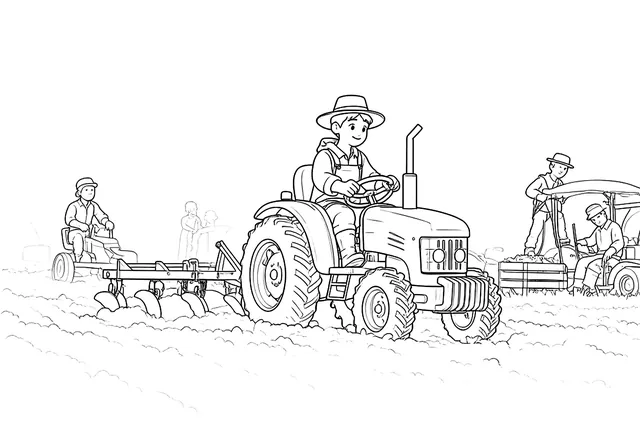
The farm pages are a good start for talking about food. The orchard sheet shows apples being picked, the vegetable patch shows things growing in rows, the hens sit round their hen house, and the tractor ploughs a field ready for planting. At the next meal, ask where each food on the plate began: a tree, a field, an animal, a pond. Plant a few seeds in a pot on the windowsill, such as beans or cress, and colour the vegetable patch sheet while waiting for the first shoots to appear. Talk about what the farmer does each season: ploughing in one season, sowing, then weeding, picking and storing. The tractor, the orchard and the vegetable patch each show a different part of the year.
- Ask where each food began
- Grow cress while you colour
Farms around the world
Not every farm has a red barn. Some grow rice in flooded terraces on hillsides, some herd goats across dry hills, some grow olives, coffee, cocoa or tea, and some keep camels, yaks or reindeer. Colour the red barn at sunset, then fold a sheet of paper in half and draw a very different farm on the other side. In a classroom, each child can pick a country and draw what its farms grow. Hang them in a row and see how many different foods the class has found between them. Older children can find out what animal pulls a plough in places without tractors, and colour a sheet showing that animal instead. Water buffalo, oxen and horses still do this work in many places.
- Draw a farm from somewhere else
- A class row of world farms
A farm table for a group
The farm activity pack suits nurseries, holiday clubs and family days where ages are mixed. Print the counting pack, where eggs fill the sheets, for the youngest, and the mazes for older ones; the first maze leads a hen to the egg basket inside a barn’s outline. The shadow sheets ask which outline belongs to the tractor and which to the pig. Memory cards pair goats with pumpkins, and a few sets laid out on a table keep a group busy while the grown-ups talk. Put names on every sheet so they go home with the right child. A grown-up can ask each child to name their favourite farm animal and why, which makes a good start for a short story they tell or write on the back of their sheet before going home.
- Eggs to count for the youngest
- Memory cards for a group table
A paper farmyard to keep
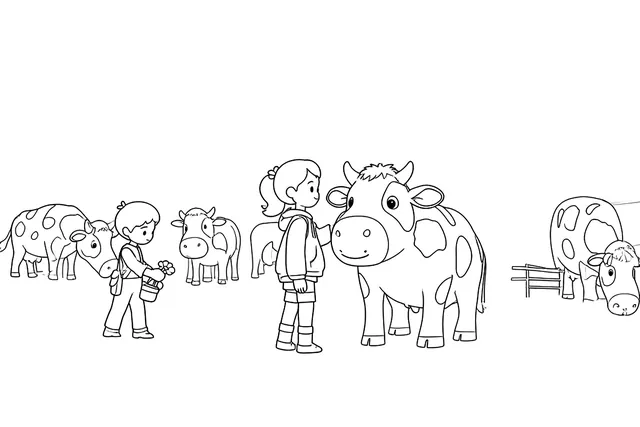
When the colouring is done, cut out the animals from the cows grazing, the sheep and the ducks, glue each to a strip of card folded into a stand, and set them up in a shoebox farmyard. Use the tractor from the dot-to-dot sheet, coloured and cut out, to pull a matchbox trailer. Draw fences with a ruler on the lid. Grandparents who grew up near farms often have stories to add, about milking by hand or chasing escaped pigs, and the farmyard becomes a place to tell them. Add a duck pond made from a circle of blue paper and a hen house from a small box with a door cut in it. The farmyard can grow over a week as more pages are coloured and cut out.
- Fold-card stands for each animal
- A dot-to-dot tractor to pull the trailer