A burrow on the living-room floor
Rabbits live in burrows called warrens, with tunnels that join many rooms underground. Drape a blanket over two chairs and you have one. Put the colouring pages and a tin of crayons inside, and colour by torchlight. Before each sheet, hop from the sofa to the burrow on two feet, the way a rabbit moves, with its long back legs doing the work. When the bunny maze comes out, trace the path with a finger first, then with a pencil. It turns a grey afternoon indoors into an expedition, and nobody has to leave the house. Older brothers and sisters can draw a map of the warren on the back of a sheet, with a sleeping room, a food store and an escape tunnel, and label every room in their best handwriting.
- Count the hops between the sofa and the burrow
- Keep finished sheets in a shoebox burrow
Learn what rabbits really eat
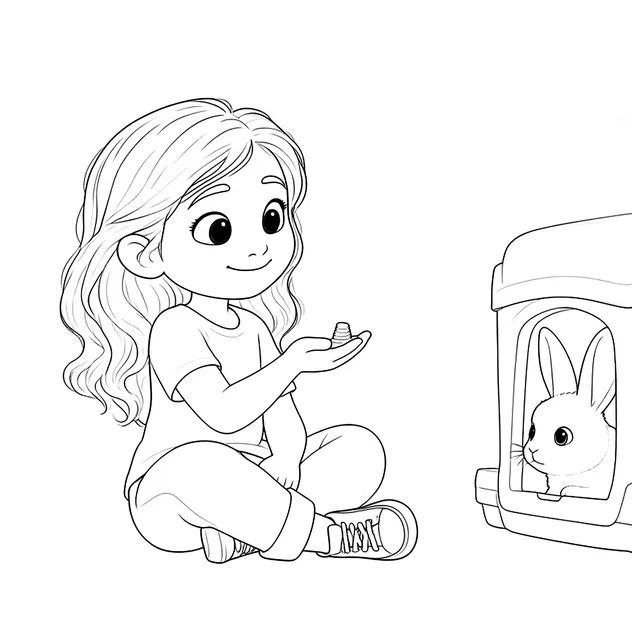
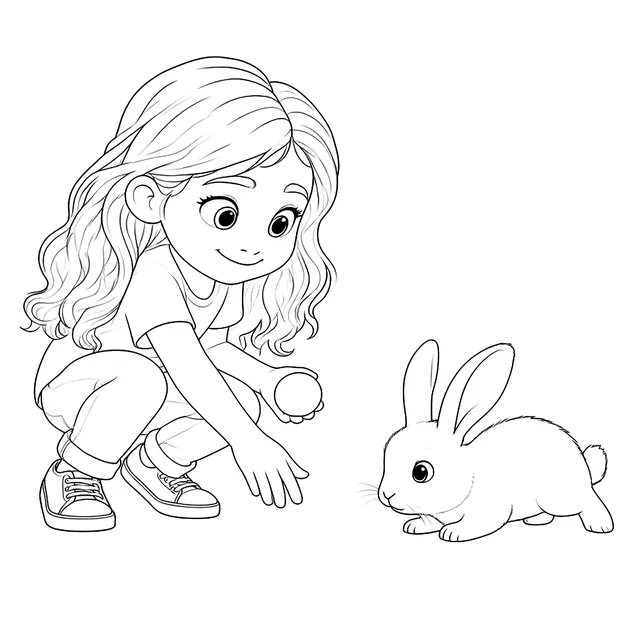
Cartoons give rabbits a carrot every day, but real rabbits mostly eat hay and grass, with leafy greens and only the odd bite of carrot as a treat. Talk about it while colouring the girl feeding her bunny. Then make a pretend menu card together: draw hay, dandelion leaves, parsley and a single small carrot, and stick it beside the sheet. If you have a pet rabbit at home, or a friend does, the card can go next to the hutch. It is a gentle way to learn that looking after an animal means knowing what it needs. Rabbits’ teeth never stop growing, which is why they need so much hay to chew. Children are usually amazed by this, and it explains why a rabbit nibbles all day long rather than eating three meals.
- Hay, grass and leafy greens every day
- Carrot and fruit only as small treats
A spring morning for a group
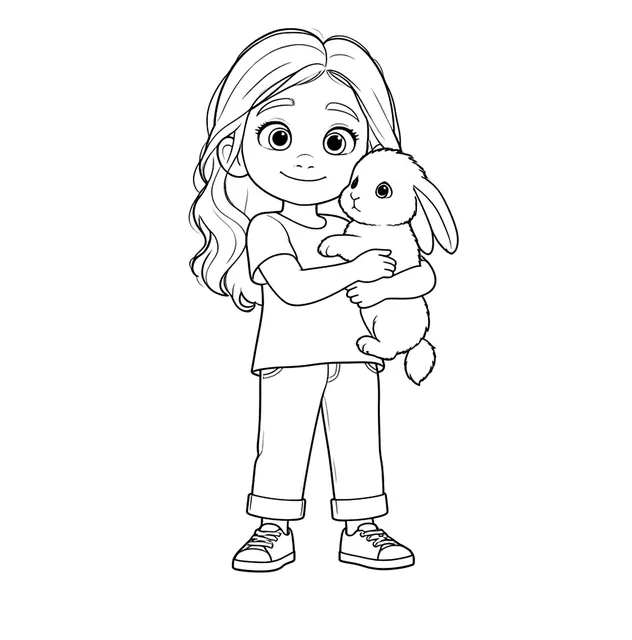
Bunnies belong to spring in many places, and the sheets suit a nursery, a reading group or a care home just as well as a kitchen table. Print the counting pack for the younger ones and the dot-to-dot for the older ones, so everyone works on the same rabbit at their own level. Grandparents and grown-ups can colour the cuddling picture alongside, which tends to start conversations about pets they once had. Pin everything up in a long row as a bunny trail across the wall, and let each person find their own name on the way along. Leave a few pencils and spare sheets on the table afterwards. Someone always comes back later in the day wanting to finish a rabbit, or to start a second one for a friend or a neighbour.
- Same theme, three levels for mixed ages
- A wall trail with every name on it
The memory game in the garden
The bunny memory cards pair chicks with ladybirds, and they are just right for an afternoon outside. Print them on thick paper, cut them out and lay them face down on a blanket on the grass. Each time someone turns over a ladybird, everyone has to spot something red nearby; each chick means something yellow. Younger players start with six pairs, older ones try twelve or eighteen. Afterwards, go looking for real ladybirds on the leaves, gently, and put back anything you find exactly where it was. Bring the cards back inside when the light fades and play one last round at the table. Whoever wins chooses which bunny colouring page everyone does next, and the loser sharpens the pencils.
- Six pairs for ages 3 to 4
- Eighteen pairs for a real challenge
An egg-hunt table
Painted eggs, spring flowers and carrots turn up all through the activity pack, which makes it a quiet corner for a spring party or an egg hunt. Set a table with the mazes, the matching sheets and a pot of pencils, and send children there between hunts while the next round is hidden. Print one colouring page per guest with their name on it as a place card, and let them colour it while the food comes out. The finished pages make a small present to take home, and they are calmer than another bag of sweets. For older children, hide a few dot-to-dot sheets with the eggs. Whoever finds one has to join the dots before the next round, and the sitting bunny appearing on the page is part of the prize.
- Name sheets as place cards
- A puzzle table between hunt rounds
Tracing long ears and short names
The tracing pack puts a floppy-eared bunny beside the name, so a child practises their own letters next to something they want to finish colouring. Start with the bunny’s outline, which is big and forgiving, then move to the letters. Short names fit in one breath; longer ones, up to sixteen letters, can be done a few letters a day. Say each letter aloud as the pencil moves. On level 3 the letters get smaller and the bunny gets more detail, so the same sheet keeps working as handwriting grows steadier over the year. Grown-ups can trace along too, in pen on a sheet of their own, which makes it feel like something done together rather than homework. Praise a careful line, not a perfect one.
- Outline first, letters second
- A few letters a day for long names