The great cardboard box afternoon
Every cat seems to prefer the box to the present inside it, so save a few boxes for a wet day. Cut doors and windows, tape them together into a cat castle or a café, and decorate the walls with finished colouring pages. A family cat will probably move in at once; a toy one will need carrying. Lay a trail of yarn through the rooms and let the children follow it to a hidden treat. Settle down afterwards with the counting sheets, where balls of yarn are waiting to be counted, and finish with the colouring page of the cat resting in a basket.
- Doors, windows and tape
- A yarn trail to a hidden treat
Calm colouring for all ages
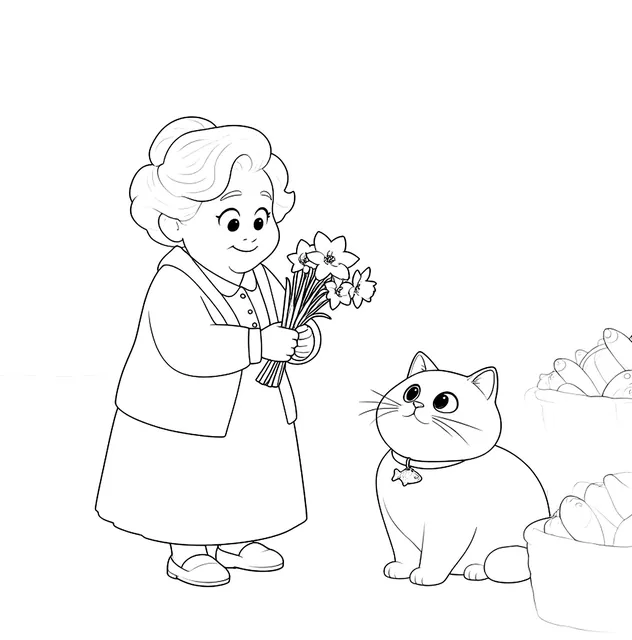
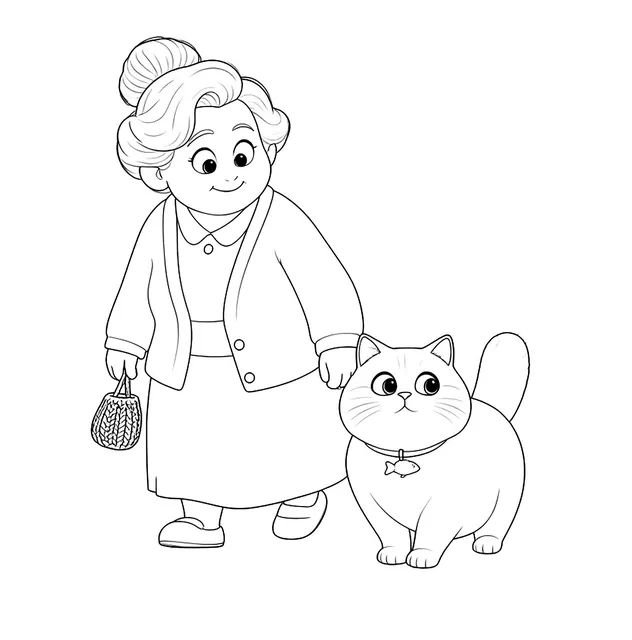
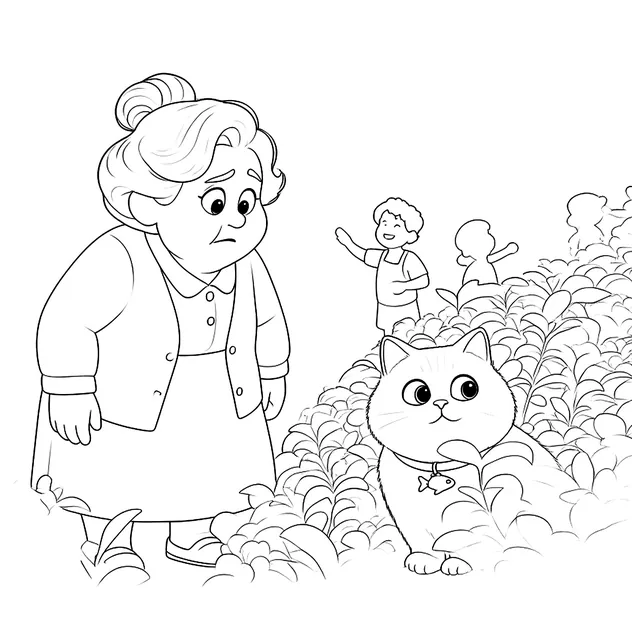
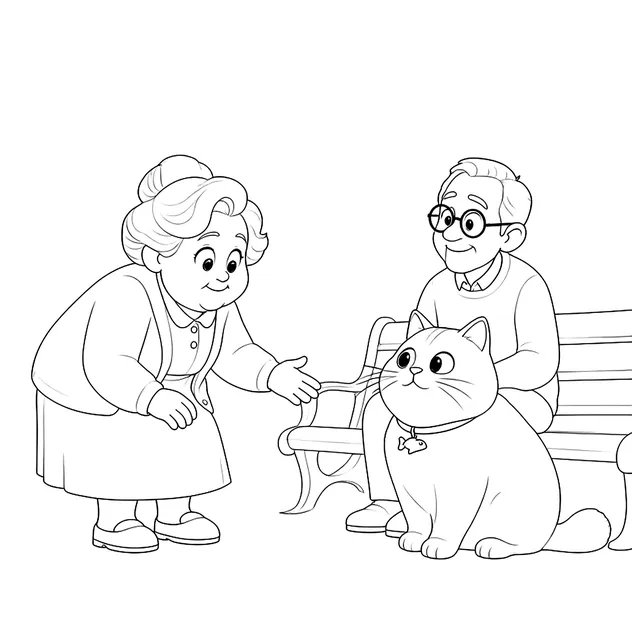
Many of the cat colouring pages show grown-ups with their cats, a woman in a rocking chair, a couple on a park bench, so they suit care homes, libraries and afternoons with grandparents as much as a classroom. Lay out the sheets with good pencils and let people choose. Conversation tends to start by itself: the cat someone had as a child, the one who sat on the newspaper, the one who always came home. Younger children can trace a stretching cat beside their name while older helpers read the level 3 maze aloud. Pin the finished pictures up together as a shared wall.
- Pages with grown-ups and their cats
- Swap stories about cats you have known
A kitten tea party
Set a low table with teacups, saucers and a plate of fish-shaped biscuits, and invite every toy cat in the house. Guests can draw whiskers on their cheeks and wear paper ears on a headband. Play pass the ball of yarn, where whoever holds it when the music stops must meow a question for the others to answer. The memory cards pair feathers with teacups, which suits the table perfectly. For a quieter moment, hand out the colouring page of the chubby cat in a fish collar. At home time, a sleepy-cat dot-to-dot carrying each guest’s name goes into their bag.
- Paper ears and drawn-on whiskers
- Pass the yarn and meow a question
What a cat is telling you
Cats talk with their whole bodies. A tail held straight up usually means a happy hello, a slow blink is a friendly sign, and a twitching tail can mean a cat has had enough. Their whiskers are roughly as wide as their body, which helps them judge whether a gap is big enough to squeeze through. Cats sleep for twelve hours or more a day, and many purr when they are content. Watch a real cat, or the one in the colouring page watching a pigeon, and guess what each pose means. Children can try slow-blinking at a friendly cat and see if it blinks back.
- Tail up means hello
- Whiskers measure the gap
Cats in stories and history
People have shared their homes with cats for thousands of years. In ancient Egypt, cats were treasured and often painted beside their families. In Japan, a small cat figure with one paw raised is said to beckon good luck into shops. Norse stories tell of a goddess whose chariot was pulled by two great cats, and sailors on many ships kept a cat on board to chase mice from the stores. Choose one story each day and draw the cat in it on the back of a sheet. Older children can write a short line underneath saying where the story comes from.
- A beckoning cat, a chariot and a ship’s cat
- Draw each story’s cat on the back
Tabby stripes and other coats
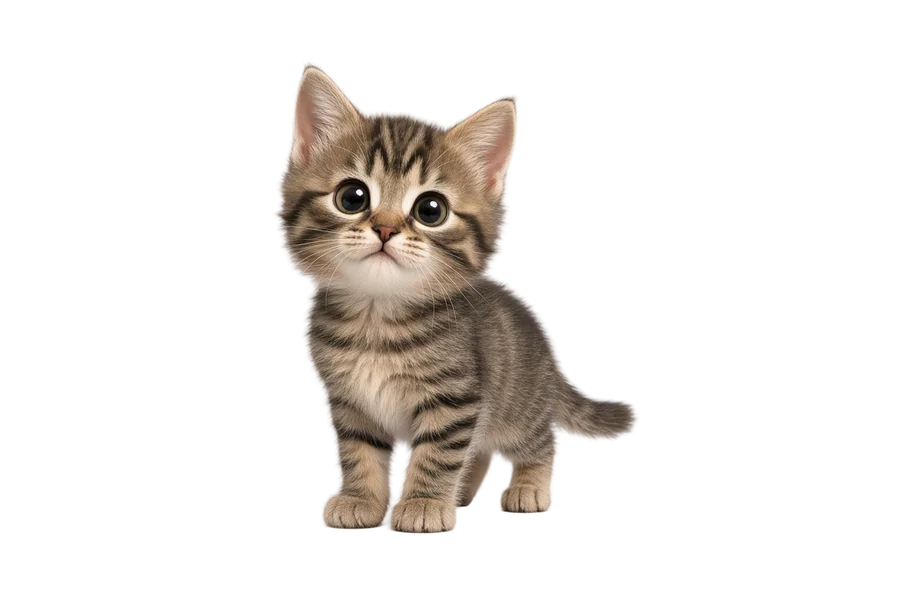
Look closely at a tabby and you will usually find a letter M drawn across its forehead. Tabbies come with stripes, swirls or spots, and other coats have names worth learning too: ginger, tortoiseshell, a calico patchwork of three colours, or a tuxedo cat that looks dressed for dinner. Give each child a cat colouring page and let them choose a coat to copy carefully, perhaps the family cat or the one from next door. Older children can count stripes and try to make both sides match. Line the finished cats up as a pretend cat show, with ribbons for the fluffiest, the stripiest and the sleepiest.
- Find the M on a tabby’s forehead
- A pretend cat show with silly ribbons