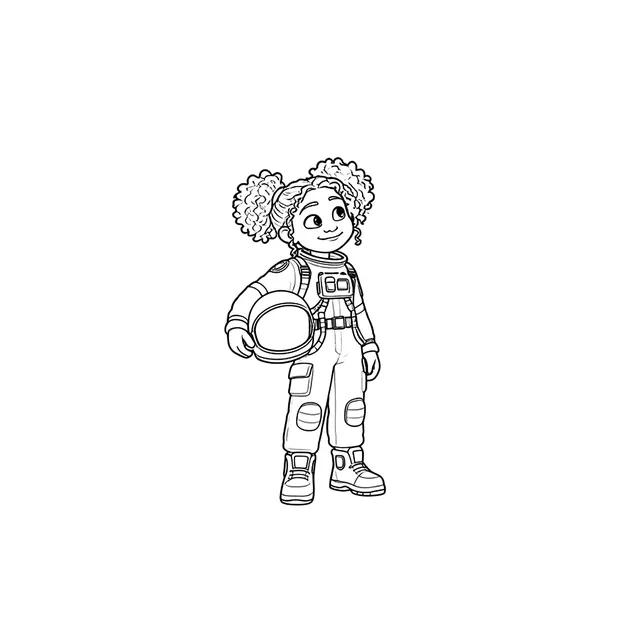
Mission control in the living room
A rainy day is the perfect time to launch. Build a rocket from a large box, with a window cut in the side and a cone of card on top, and set up mission control on a chair beside it with a notebook, a torch and a toy walkie-talkie. Write a pre-flight checklist together: helmet on, snacks packed, teddy strapped in. Count down from ten in as many languages as the family knows. Once in orbit, colour the astronaut floating in space, then land safely and fill in the counting sheet with stars. A grown-up can radio in surprise problems for the crew to solve.
- A pre-flight checklist
- Count down in different languages
The solar system to scale
Pictures squash the planets together, but a roll of toilet paper shows how spread out they really are. With Earth two and a half squares from the Sun, Mercury sits about one square away, Jupiter about thirteen and Neptune about seventy-five. Lay it out along a corridor or the playground and stand a pupil at each planet holding a coloured sheet. Children are always surprised by how empty space is. Back inside, mazes at three levels let a mixed class carry on at their own pace. With the class list typed in, the names land on each pupil’s own sheets.
- One square, then thirteen, then seventy-five
- A pupil stands at each planet
A launch-day party
Greet guests at a cardboard launch pad and give each one a paper mission badge with their name. Antennae made from headbands and pipe cleaners turn anyone into a friendly alien. Hide balls of kitchen foil around the garden as moon rocks and let teams collect them, then weigh or count the haul. Play astronaut freeze: everyone floats slowly around the room, and when the music stops, they must hold still as if weightless. The memory cards pair telescopes with comets and suit a quieter table. When parents arrive, each astronaut leaves with a rocket dot-to-dot that bears their name.
- Foil moon rocks to collect
- Float, then freeze
A clear night of stargazing
On a clear evening, wrap up warm and spend twenty minutes outside away from bright lights; eyes need about that long to adjust to the dark. Start with the moon and draw its shape, then do it again every few nights to watch it change. Look for a bright point that does not twinkle, which is often a planet. Different peoples have seen different pictures in the same stars: one group that many call a hunter has also been seen as a canoe and as a turtle. Invent your family’s own constellation and draw it on the back of a sheet, joining the dots like a dot-to-dot.
- Draw the moon every few nights
- Invent a family constellation
A day in an astronaut’s life
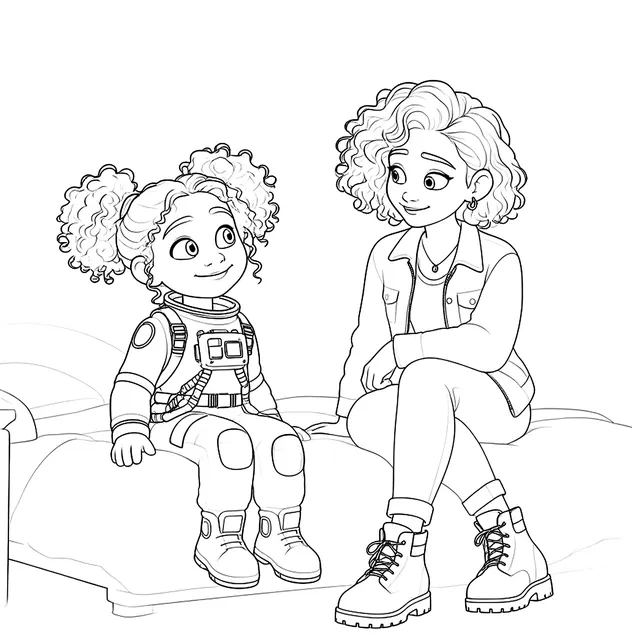
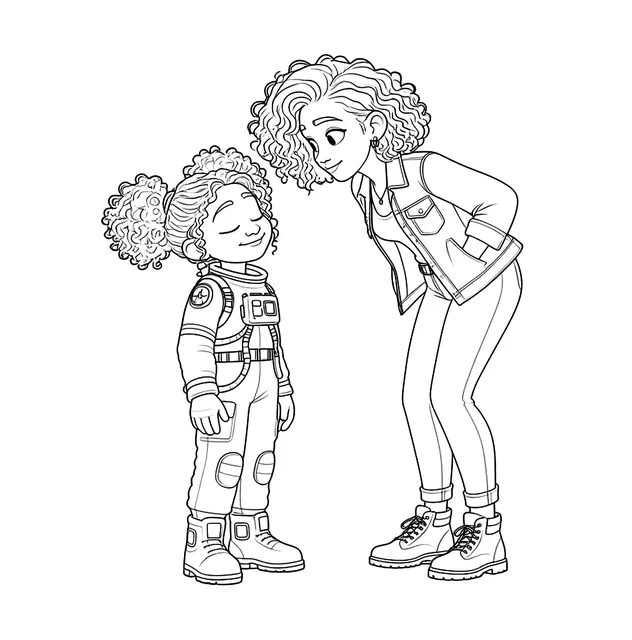
On the space station, astronauts from many countries live and work together, and everyday jobs become strange. Water floats in wobbling balls, and crumbs drift into machines, so tortillas are popular instead of bread. Sleeping bags are fastened to the wall so nobody floats away at night, and exercise every day keeps their bodies strong for the return to Earth. Act out a day with your young astronaut, from brushing teeth without letting the water escape to strapping in for bed. The colouring page of a mother tucking in an astronaut is a sweet way to end, and it may make bedtime a little easier.
- Tortillas instead of crumbly bread
- Sleeping bags fixed to the wall
Craters and moon dust
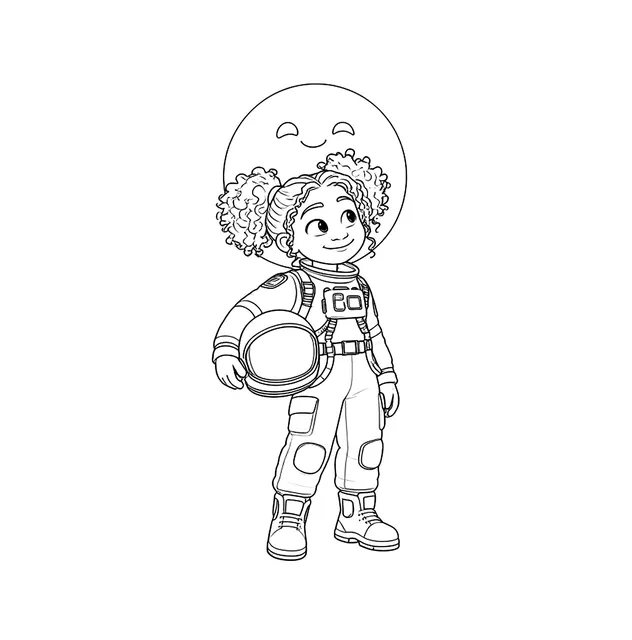
The moon is covered in craters made by rocks crashing into it, and you can make your own in a baking tray. Fill it with flour, dust a thin layer of cocoa on top, then drop marbles and pebbles from different heights. Bigger and faster stones make wider craters and throw out bright rays of flour, just like on the moon. Because the moon has no wind or rain, astronauts’ footprints from decades ago are still there. Press a toy boot into the flour and talk about that. Then colour the astronaut sifting moon dust, or the young explorer standing on the moon.
- Flour, cocoa and dropped marbles
- Footprints that stay for ages